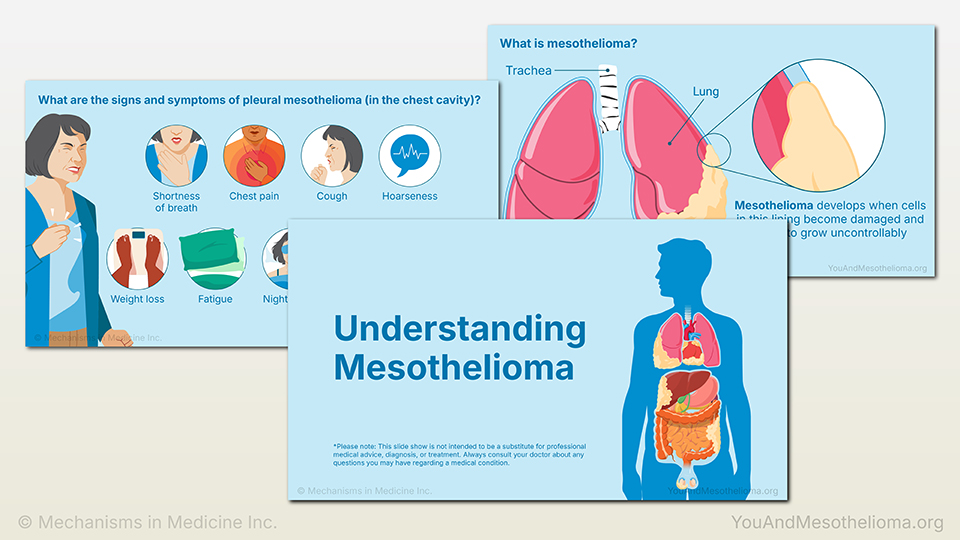
Understanding Mesothelioma
What is mesothelioma?
Where does mesothelioma occur?
What are the types of mesothelioma?
What are the signs and symptoms of pleural mesothelioma (in the chest cavity)?
What are the signs and symptoms of pleural mesothelioma?
What are the signs and symptoms of pleural mesothelioma when the cancer is growing (progressing)?
What are the signs and symptoms of peritoneal mesothelioma (in the abdominal cavity)?
How is mesothelioma diagnosed and which tests are used?
How do doctors assess your mesothelioma cancer?
How does the tumor size and extent of cancer affect the types of treatment?
What are the types of management for mesothelioma patients?
Why should a mesothelioma specialist be involved as early as possible?
Why is a multidisciplinary team important for mesothelioma treatment?

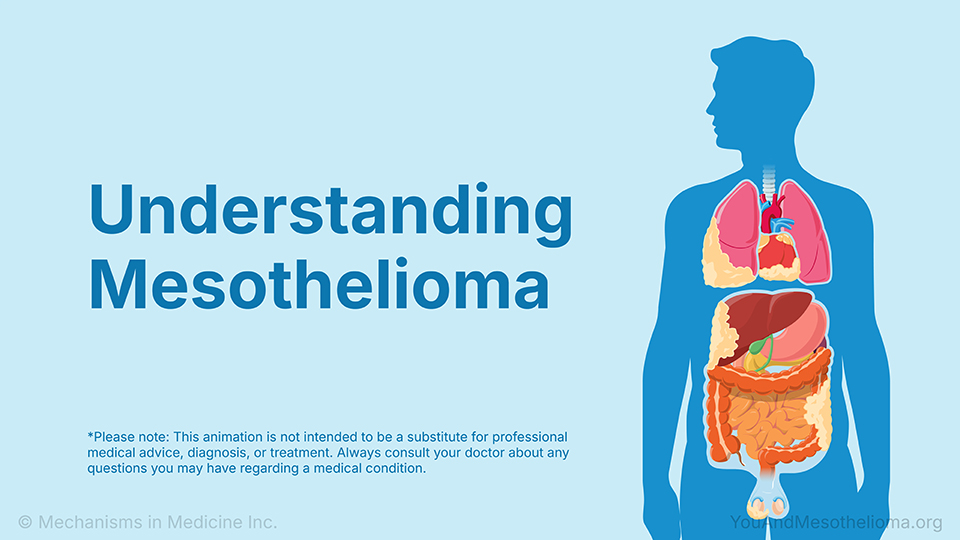
Understanding Mesothelioma

This slide show is not intended to be a substitute for professional medical advice, diagnosis, or treatment. Always consult your doctor about any questions you may have regarding a medical condition.

What is mesothelioma?

Mesothelioma is a rare type of cancer that begins in the mesothelium, a thin lining that surrounds a few of the organs in your body.

The mesothelium produces a small amount of fluid that helps organs move smoothly against one another. For example, it helps the lungs expand and contract easily as you breathe.

What is mesothelioma?

Mesothelioma develops when cells in this lining become damaged and begin to grow uncontrollably. Over time, mesothelioma cancer can spread along the lining's surface.

Where does mesothelioma occur?

About 8 out of 10 mesotheliomas develop in the chest cavity. They usually grow in the lining around the lungs or chest wall.

The second most common site is the abdominal cavity, where the cancer grows in the lining surrounding abdominal organs.

Very rarely, mesothelioma develops in the lining around the heart or testicles.

What are the types of mesothelioma?

The type of mesothelioma is named by where it starts. Cancer in the chest cavity is called pleural mesothelioma. Cancer in the abdomen is called peritoneal mesothelioma.

Doctors also classify mesothelioma by how the cells look under a microscope:

  • Epithelioid mesothelioma is the most common type, making up about 6 out of 10 cases.
  • Sarcomatoid mesothelioma occurs in about 1 out of 10 cases.
  • Biphasic, or mixed, mesothelioma includes both epithelioid and sarcomatoid types and accounts for about 3 out of 10 cases.

What are the signs and symptoms of pleural mesothelioma (in the chest cavity)?

Common symptoms of pleural mesothelioma are shortness of breath, chest pain, and cough.

What are the signs and symptoms of pleural mesothelioma?

Other symptoms may include hoarseness, weight loss, fatigue, night sweats, or difficulty swallowing. Fluid can build up around the lungs, making breathing more difficult.

What are the signs and symptoms of pleural mesothelioma when the cancer is growing (progressing)?

If the cancer begins to grow (progress), symptoms may include increasing pain, shortness of breath, abdominal swelling, weight loss, or worsening fatigue.

What are the signs and symptoms of peritoneal mesothelioma (in the abdominal cavity)?

Common symptoms of peritoneal mesothelioma include swelling or bloating of the belly, abdominal pain, constipation, weight loss, nausea, and loss of appetite. The abdomen may fill with extra fluid, which can cause discomfort and a feeling of fullness.

How is mesothelioma diagnosed and which tests are used?

To diagnose mesothelioma, your doctor will start by asking about your medical history and risk factors. They will listen to your heart and lungs and examine your abdomen.

How is mesothelioma diagnosed and which tests are used?

If mesothelioma is suspected, your doctor may order imaging tests such as a chest X-ray, CT scan, or MRI. Blood tests may also be done.

How is mesothelioma diagnosed and which tests are used?

To confirm the diagnosis, a biopsy is always needed. This involves removing a small tissue sample and examining it under a microscope.

How do doctors assess your mesothelioma cancer?

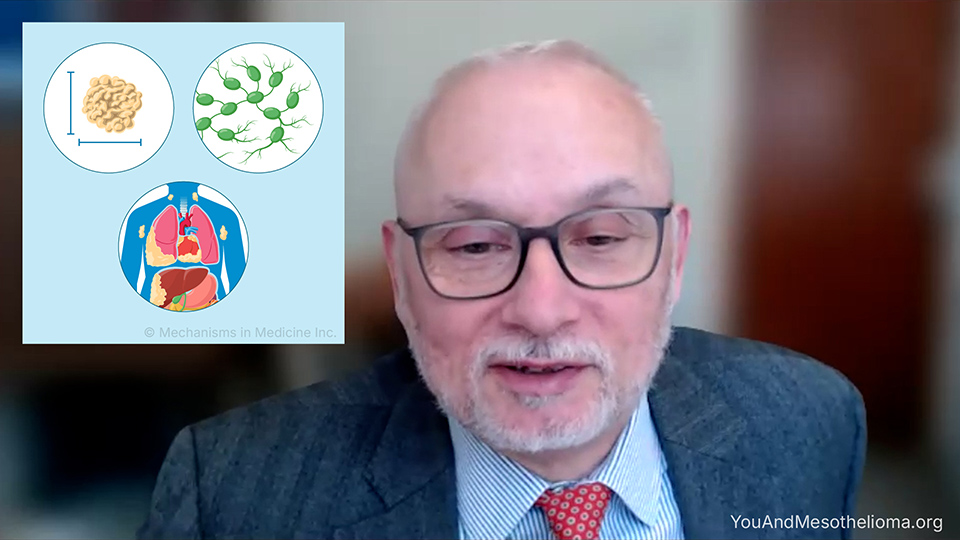
Doctors use results from several tests to understand how much cancer is present and where it is located. They use a staging system.

They assign a stage from I to IV using the TNM system:

  • T describes tumor size and extent.
  • N indicates whether lymph nodes are involved.
  • M shows whether the cancer has spread to other organs, known as metastasis.

How does the tumor size and extent of cancer affect the types of treatment?

Assessing the tumor size and extent of mesothelioma helps guide treatment decisions.

Smaller tumors may be easier to remove with surgery. Larger or more advanced cancers often require a combination of treatments. Treatments aim to reduce tumor size and relieve symptoms.

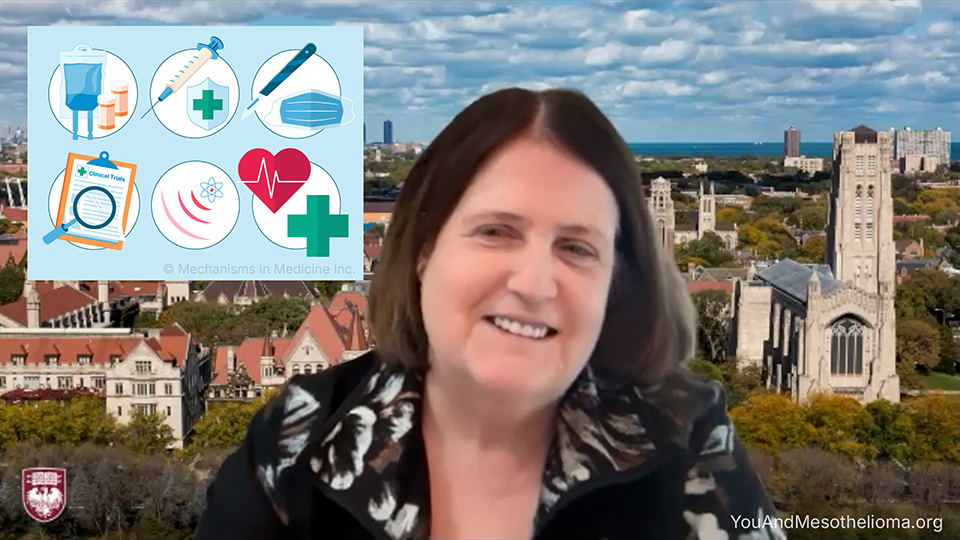
Treatment options may include:

  • Surgery
  • Chemotherapy
  • Immunotherapy
  • Targeted therapy
  • Radiation therapy
  • Clinical trials

What are the types of management for mesothelioma patients?

Managing mesothelioma involves more than just treating the tumor.

Active treatments like surgery, chemotherapy, immunotherapy, radiation therapy, and clinical trials aim to remove or shrink the cancer or keep the cancer from growing.

What are the types of management for mesothelioma patients?

Supportive and palliative care focuses on relieving symptoms and side effects. This includes nutrition, mental health, physical therapy, and caregiver support, as well as hospice care, and advanced care planning.

Why should a mesothelioma specialist be involved as early as possible?

Mesothelioma is rare and complex, and different types may respond differently to certain treatments.

Why should a mesothelioma specialist be involved as early as possible?

Mesothelioma specialists have experience treating this disease and understand which options may work best for your situation.

Why should a mesothelioma specialist be involved as early as possible?

Because it is uncommon, not all cancer surgeons or oncologists may be familiar with the most up-to-date approaches.

Why is a multidisciplinary team important for mesothelioma treatment?

Treating mesothelioma requires a team approach. Multidisciplinary centers bring together specialists who focus on mesothelioma. This team may include surgeons, medical oncologists, and radiation oncologists who work together to create a personalized treatment plan.

Why is a multidisciplinary team important for mesothelioma treatment?

The Mesothelioma Applied Research Foundation offers helpful resources for patients, families, and caregivers, including guidance on finding experienced treatment centers.

References:

  1. American Cancer Society. Mesothelioma.
    https://www.cancer.org/cancer/types/malignant-mesothelioma/about/malignant-mesothelioma.html
  2. National Cancer Institute. Malignant Mesothelioma Treatment (PDQ®) – Health Professional Version.
    https://www.cancer.gov/types/mesothelioma/hp/mesothelioma-treatment-pdq
  3. National Comprehensive Cancer Network. Guidelines for Patients. Pleural Mesothelioma. Version 2. 2025.
    https://www.nccn.org/patientresources/patient-resources/guidelines-for-patients/guidelines-for-patients-details?patientGuidelineId=19
  4. Kindler HL, Ismaila N, Bazhenova L, Chu Q, Churpek JE, Dagogo-Jack I, Bryan DS, Drazer MW, Forde P, Husain AN, Sauter JL, Rusch V, Bradbury PA, Cho BCJ, de Perrot M, Ghafoor A, Graham DL, Khorshid O, Lebensohn A, White J, Hassan R. Treatment of Pleural Mesothelioma: ASCO Guideline Update. J Clin Oncol. 2025 Mar 10;43(8):1006-1038.
  5. Brown LM, Wilkins SG, Bansal VV, Su DG, Gomez-Mayorga J, Turaga KK, Gunderson CG, Lee B, Nash GM, Hays JL, Raghav KP, Husain AL, Kluger MD, Zauderer MG, Kindler HL, Alexander HR; Peritoneal Surface Malignancies (PSM) Consortium Group. Consensus Guideline for the Management of Peritoneal Mesothelioma. Ann Surg Oncol. 2026 Jun;33(6):5125-5141.

Understanding Mesothelioma — Slide Show
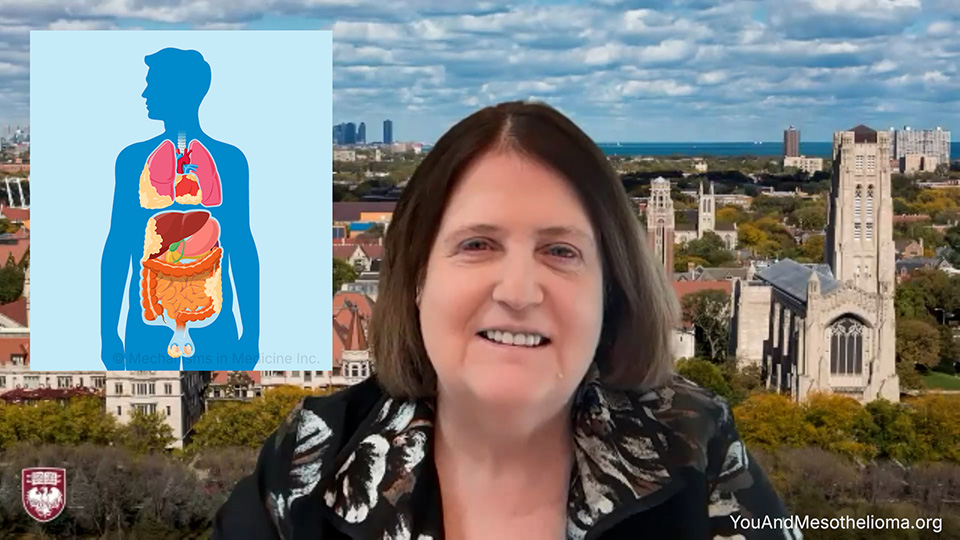
This slide show helps you learn about mesothelioma. It explains what mesothelioma is, where it develops, and the different types, including pleural mesothelioma, peritoneal mesothelioma, pericardial mesothelioma, and testicular mesothelioma. You will learn about common signs and symptoms, how mesothelioma is diagnosed, and how cancer staging helps guide treatment decisions. The slide show provides an overview of treatment and management options, including surgery, chemotherapy, immunotherapy, radiation therapy, clinical trials, and supportive and palliative care. You will also learn why working with mesothelioma specialists and a multidisciplinary care team is important for developing a personalized treatment plan.

  • Share with family and friends:

Click here to take our SURVEY
Your feedback is important to us! We will use your feedback to develop future areas of content about mesothelioma which will help other patients, caregivers, and families.