

Expert Videos

Module 1: Understanding Mesothelioma

What is mesothelioma? What are the types?
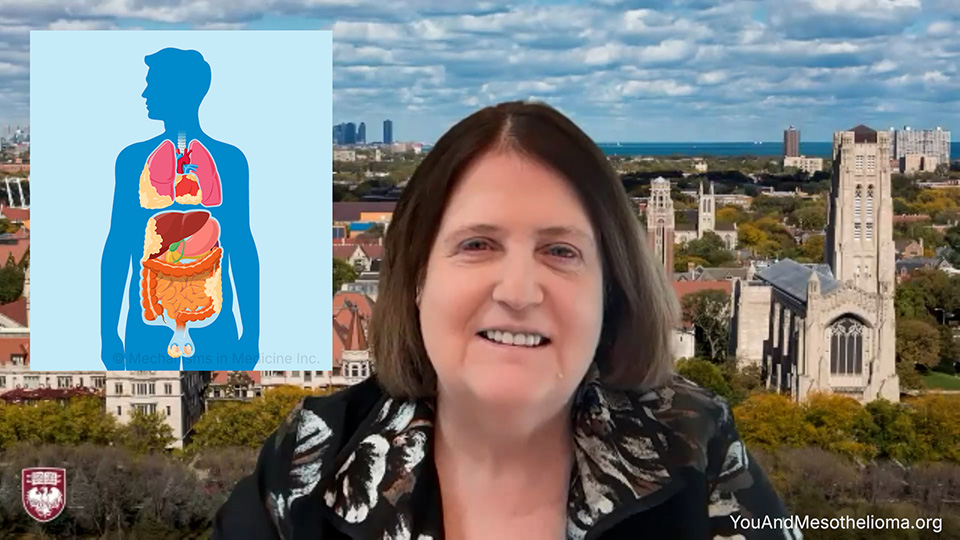
In this video, medical oncologist Dr. Hedy Lee Kindler, joined by thoracic surgeon Dr. Raphael Bueno, explains what mesothelioma is and the different types of this uncommon cancer. She explains that mesothelioma starts in the mesothelium, the thin lining that surrounds certain organs. The main types depend on where the cancer develops in the body and include pleural mesothelioma, peritoneal mesothelioma, pericardial mesothelioma, and testicular mesothelioma. Dr. Kindler also describes the cell types found on biopsy, including epithelioid, sarcomatoid, and biphasic (mixed) mesothelioma, and explains why knowing the subtype helps guide treatment decisions and understand prognosis.
Watch now
What are the signs and symptoms of mesothelioma?
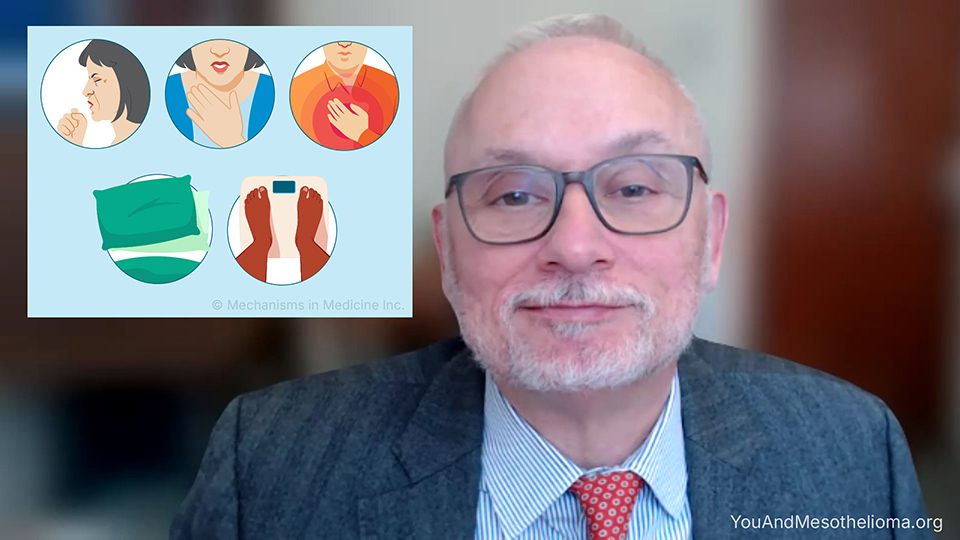
In this video, thoracic surgeon Dr. Raphael Bueno, joined by medical oncologist Dr. Hedy Lee Kindler, explains the signs and symptoms of mesothelioma. He notes that mesothelioma can be difficult to diagnose early, and some people may have no symptoms at first. For pleural mesothelioma, symptoms may include cough, shortness of breath, chest pain or tightness, fatigue, and weight loss, along with fluid around the lungs. For peritoneal mesothelioma, symptoms can include abdominal pain, bloating, swelling, nausea, changes in bowel habits, fatigue, loss of appetite, weight loss, as well as fluid buildup in the abdomen.
Watch now
How is mesothelioma diagnosed? What tests are used?
Dr. Hedy Lee Kindler, a medical oncologist and professor of medicine at the University of Chicago, explains how mesothelioma is diagnosed and what tests are used. For pleural mesothelioma, diagnosis begins with a physical exam and imaging tests such as a chest X-ray, CT scan, PET scan, and sometimes an MRI. If fluid is present around the lungs, it may be drained and tested using a procedure called a thoracentesis. However, a biopsy is usually needed to confirm the diagnosis, often done using image-guided techniques or a thoracoscopy, which allows doctors to take multiple tissue samples. For peritoneal mesothelioma, diagnosis also starts with a physical exam and imaging such as CT or MRI scans, and sometimes a PET scan. Fluid in the abdomen may be removed and analyzed using a procedure called a paracentesis. A biopsy is still required, either through image-guided needle sampling or a laparoscopy to collect tissue from the abdomen. In both pleural and peritoneal mesothelioma, germline and somatic testing may be done to look for molecular changes that help guide treatment decisions.
Watch now
What are the stages of mesothelioma?
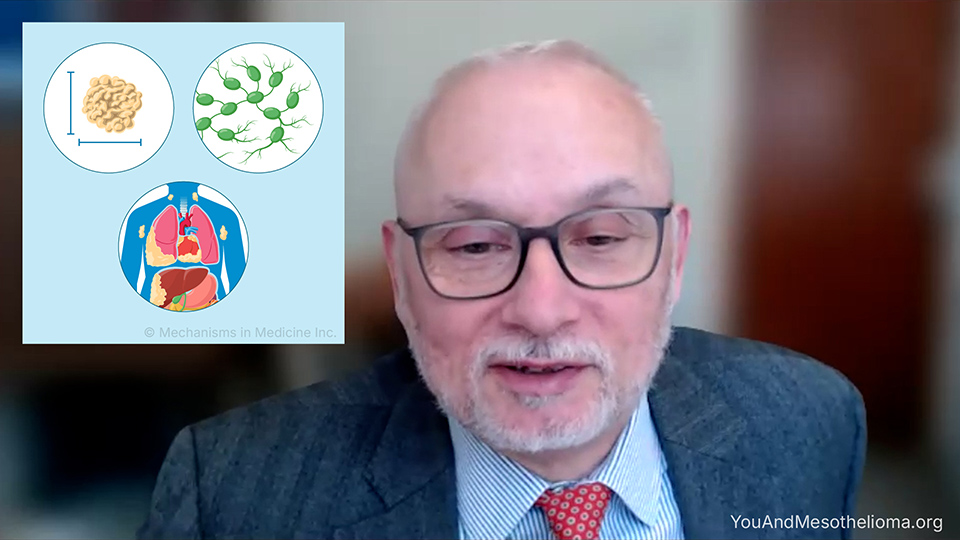
Dr. Raphael Bueno, thoracic surgeon at the Brigham and Women's Hospital in Boston and a professor of surgery at Harvard Medical School, provides an overview of how mesothelioma is staged. He explains that pleural mesothelioma is commonly staged using the TNM system, which looks at tumor size and spread (T), lymph node involvement (N), and whether the cancer has metastasized (M), assessed through CT and PET scans and sometimes biopsy. Tumor volume and chest wall involvement also help guide staging. For peritoneal mesothelioma, staging is based on the amount of tumor spread across the abdomen, often measured using a region-based scoring system. Staging helps guide prognosis and treatment, with surgery considered for early disease and systemic therapy for more advanced stages.
Watch now
How is mesothelioma treated and managed?
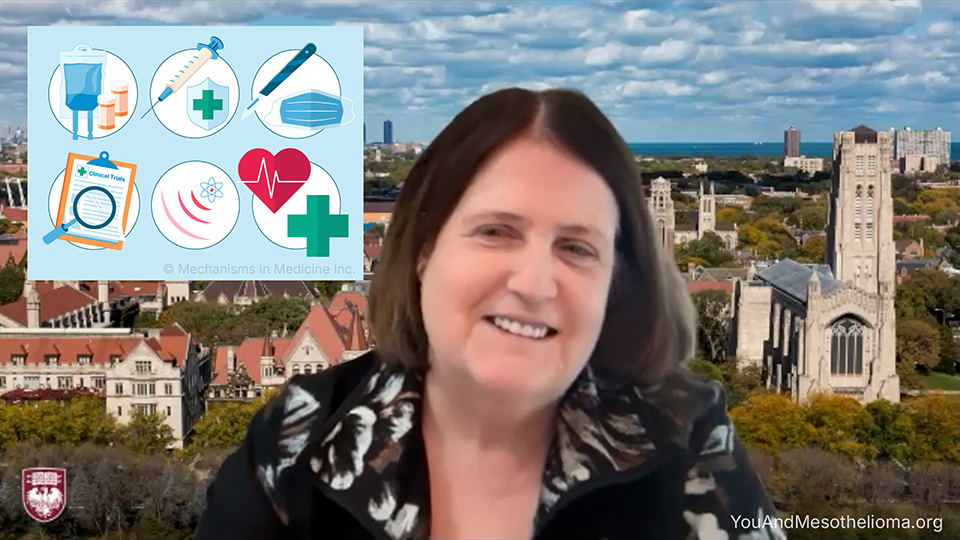
Medical oncologist Dr. Hedy Lee Kindler explains that there are many more options for treating and managing mesothelioma, and treatment is tailored to each person. Decisions depend on the stage of the cancer, the cell type (epithelioid, sarcomatoid, or biphasic), overall health, and patient preferences. Treatment options may include chemotherapy, which is given through a vein to target cancer cells, and immunotherapy, which helps the immune system better recognize and attack the tumor. Surgery may also be used to remove tumor tissue in the chest through a procedure called pleurectomy decortication, or in the abdomen, sometimes combined with heated chemotherapy in the abdominal cavity. Dr. Kindler also highlights the importance of clinical trials, which help lead to the development of new treatments, and explains that supportive care is used alongside active treatment. This can include pain and symptom management, radiation therapy for relief of symptoms, and integrative supports such as nutrition counseling, acupuncture, massage, and psychosocial care.
Watch now
Why is a mesothelioma specialist and multidisciplinary care team important for treatment?
Dr. Raphael Bueno, a professor of surgery at Harvard Medical School, and thoracic surgeon at the Brigham and Women's Hospital in Boston, explains why care from a mesothelioma specialist and multidisciplinary team is so important. He notes that mesothelioma is rare, so expertise in oncology, surgery, pathology, and radiation oncology is needed for accurate diagnosis, staging, and treatment planning. Dr. Bueno also explains that treatment outcomes, including surgery safety and effectiveness, can depend on the experience of the care team and hospital resources. Advanced treatments, such as specialized radiation techniques, heated chemotherapy, and access to clinical trials, are more often available at expert centres. He highlights that multidisciplinary care helps patients receive the most up-to-date and coordinated treatment options.
Watch now